IN THIS ARTICLE
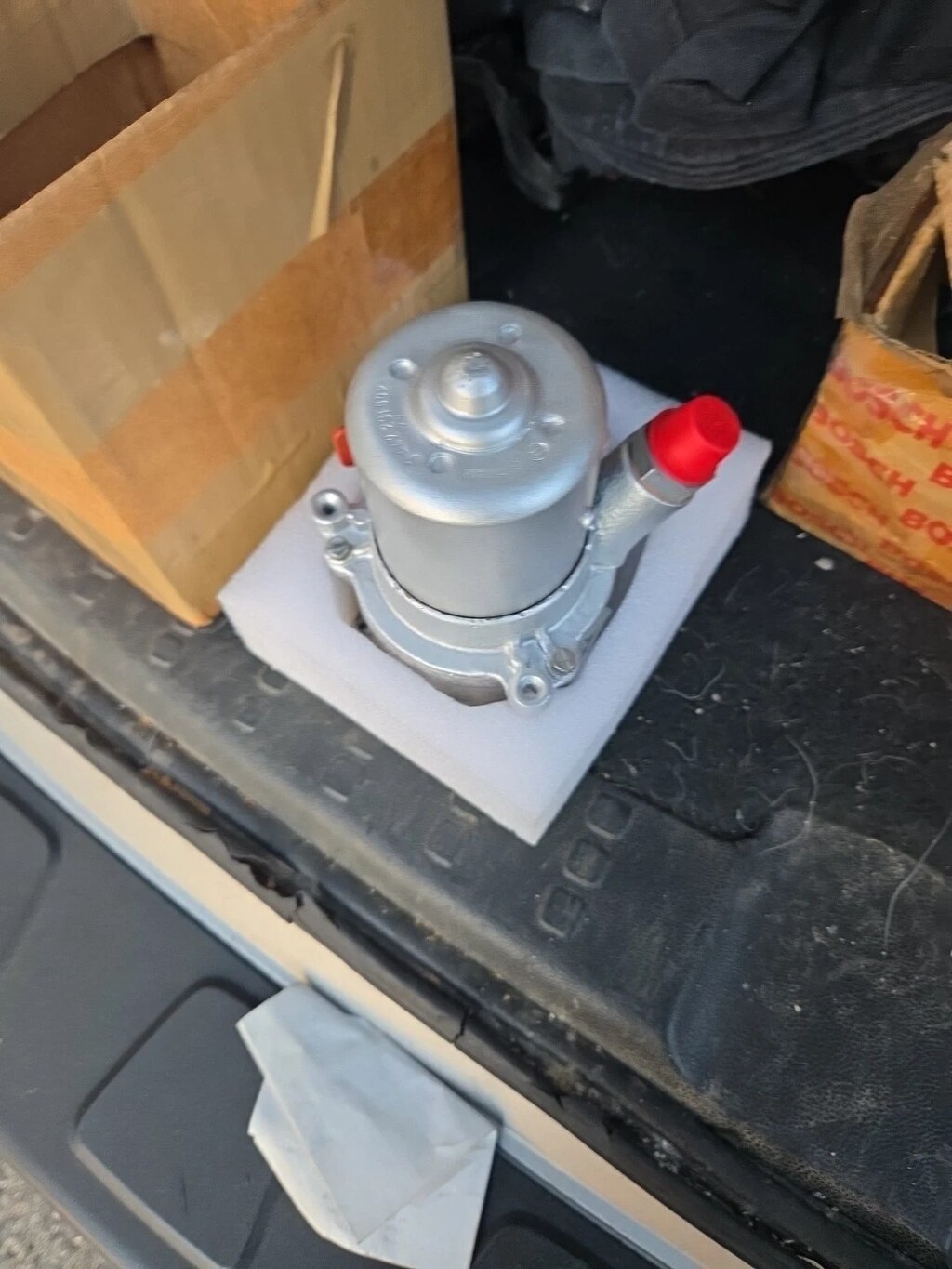
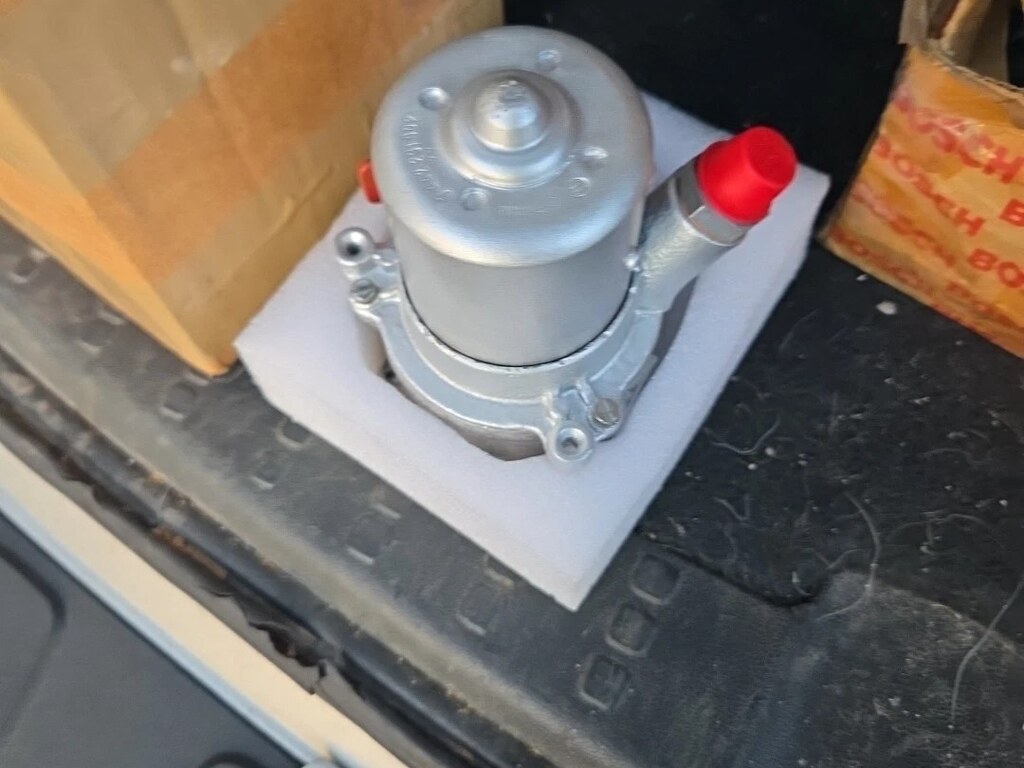
Photo: KDTL/Mercedesoem, from the actual eBay listing. This is the listed part, not a stock photo or an AI illustration.
A W113 electric fuel pump does not get much glory. It lives near the fuel tank, far from the polished valve cover and the admiring crowd. Yet when a Pagoda starts to stumble, this small electric pump deserves attention before the expensive mechanical injection pump gets the blame.
The answer is to test the fuel supply first. Confirm that the rear electric pump has power, that fuel can reach it through a clean tank and lines, and that it supplies the correct pressure and flow. A humming pump is not proof of a healthy pump. If testing shows a fault, choose a replacement by the car's fuel-system requirements and the actual part details, not by the words “fits Mercedes.”
The part featured here is an original Bosch electric pump in KDTL's 280SL fuel-pump listing, described as remanufactured. It is the feed pump near the tank, not the mechanical injection pump on the engine. The listing names W113, W111, and W108 applications, but compatibility with a particular car still needs to be checked.
That is the point of this article: one pump, one job, and a sensible way to decide whether you need it. No injection-pump surgery required.
Think of the electric pump as the delivery truck and the mechanical pump as the person who measures each order. Both matter, but they do not do the same work. Changing one because the other looks complicated is an expensive guessing game.
On the Pagoda, the electric pump moves fuel from the tank into a circulating supply system. The mechanical injection pump then meters fuel to the engine. The return side sends unused fuel back toward the tank. SLSHOP describes this circulation and its role in maintaining the supply to the mechanical pump.
That steady circulation also helps manage fuel heat. It is not enough for the electric pump to send a small trickle forward and call the job done. The engine needs a sound supply system, not merely a pump that makes a convincing noise. SLSHOP's Pagoda fuel-system account explains the cooling benefit of circulation.
This is why a fuel-supply fault can lead an owner straight to the wrong suspect. The engine runs badly, the injection system looks mysterious, and the big pump gets blamed. Meanwhile, the small pump under the car may be struggling with low voltage, a restriction, or a fault of its own.
The proper response is not to clear the mechanical pump of all possible blame. It is to give the simpler system its fair trial first.
Perhaps the car starts, idles, and then loses power on the road. Perhaps it runs for a while and begins to stumble. Or perhaps the trouble appears after a long stretch in storage, just when you have finally found a sunny afternoon.
Those symptoms are clues. They are not a pump diagnosis. Ignition faults, poor engine settings, and other fuel-system problems can produce similar complaints. SLSHOP recommends checking ignition and timing before moving deeper into the fuel system in its account of a hesitant 280SL. Read the specialist's diagnostic example.
Write down when the fault occurs. Note whether the engine is cold or fully warm, whether the fuel level seems to matter, and whether the car loses power under load or at idle. A brief, useful record beats “it sometimes does a thing,” which is the natural language of every vintage-car owner.
Also record what has already been changed. A new filter, a repaired tank, or recent wiring work may help explain the problem. The aim is to narrow the search, not to build a collection of unused parts.
If the pump is leaking fuel, that changes the priority. Do not keep driving while you ponder the cause. Have the leak made safe and the system checked before the car returns to service.
With the ignition on, you may hear the electric pump operating near the rear of the car. SLSHOP identifies listening for the pump as an early fuel-system check. Its description also shows where the pump sits on a Pagoda.
Silence can point toward a failed pump, but it can also point toward missing electrical power. Before ordering a replacement, have the circuit checked. That includes the relevant fuse, connections, wiring, and ground path.
A voltage reading at rest does not tell the whole story. Ask the technician to check the supply with the pump operating and to look for a voltage drop in the circuit. A tired connection can look respectable until it has work to do.
A noisy pump still needs testing. Sound tells you that something is moving; it does not tell you how much fuel reaches the engine. The difference matters because a working motor and a useful fuel supply are not always the same thing.
Keep electrical testing and fuel handling in qualified hands if you lack the proper tools or experience. Gasoline, loose wires, and an improvised work light do not belong in the same experiment. Saving an hour of shop labor is a poor reason to create a fire risk.
Ask for both a pressure check and a delivery-volume check using the correct procedure for your car. One measurement does not replace the other. The test point, return-line condition, and pump version all need to be understood.
The Pagoda SL Group discusses pressure at the cold-start valve and a separate flow test at the return line. That discussion gives a flow benchmark of at least one liter in fifteen seconds, but it is not a license to improvise a gasoline test at home. Have a specialist confirm the factory procedure and values for your particular system. See the Pagoda SL Group's pressure-and-flow discussion.
For this article, there is no magic pressure number that turns every pump into a match. An acceptable result must come from the proper setup, with a suitable gauge and an understood test method. A number copied from a forum without its conditions can lead you in the wrong direction.
Ask the shop to record the results. “Pressure checked” is less useful than a measured value, a test location, and a note about flow. Good records help you compare later checks and make a parts decision based on evidence.
Most important, do not adjust the mechanical injection pump to hide a supply problem. Restore the basic fuel delivery first. Tuning around a fault tends to create a second fault.
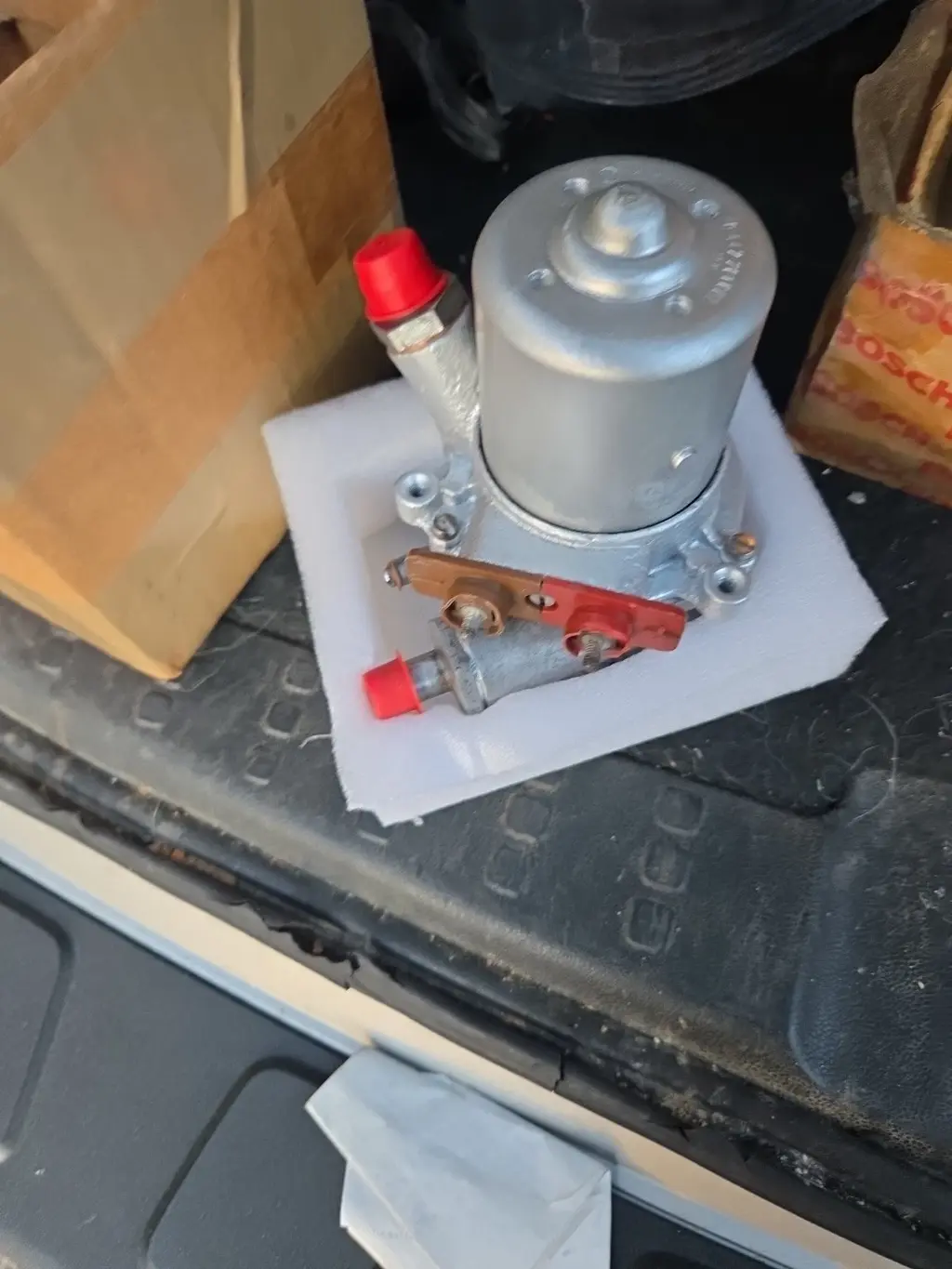
Photo: KDTL/Mercedesoem, from the Bosch pump listing. Compare the connections and mounting arrangement with your existing pump before ordering.
A fresh pump cannot clean a rusty tank. Nor can it undo a blocked line or rescue every old hose downstream. The whole supply path deserves a look before a rebuilt part goes in.
SLSHOP's 280SL example is especially useful here. The car had lost power after a long period off the road, and grit was found inside a tank that looked sound from outside. Rust and blockage were part of the fuel-starvation problem. The full account is a good reminder that exterior condition can mislead.
Have the tank, strainers, filter, hoses, and return path checked as the symptoms require. Do not assume that a painted tank is a clean tank. Paint has a remarkable talent for looking useful while doing nothing inside.
If debris is found, deal with its source. Repeated filter changes may buy time, but they do not explain why the filter keeps filling up. A new pump deserves clean fuel and a clear path.
This is also a good time to inspect the pump's mount and protective hardware. Missing or tired mounting pieces should be handled as part of a proper repair. Do not let a fresh pump hang from old hoses because the correct bracket requires one more phone call.
The featured KDTL listing identifies the pump as Bosch, describes its condition as remanufactured, and gives Mercedes number 001-091-52-01 in the item specifics. The title includes Bosch reference 0442201002. Use those details as the start of a fitment conversation, not the end of it.
Send clear photos of the pump on your car. Include its markings, hose connections, electrical connections, and bracket. Add the model, chassis number, and any known fuel-system changes. A car that has lived through decades of repairs may not still carry the setup you expect.
Ask what is included. The listing's item specifics say mounting hardware is not included, so plan for that rather than discovering it with the car already apart. Check the pump listing for its current details.
Also ask what inspection or testing information is available for the individual part. “Remanufactured” describes the listing condition; it should not be expanded into a promise about an undocumented test, new internal components, or a warranty.
The listing carries as-is and no-warranty terms, with buyer responsibility for compatibility. Read those terms before purchase and arrange professional inspection and installation. The seller's description is part of the listing.
Once the correct pump is installed, the job is not complete at the first successful start. Check for leaks, secure mounting, sound wiring, and proper fuel delivery. Recheck the system under the conditions that caused the original complaint.
If the car used to stumble after warming up, a clean cold idle proves very little. If it lost power on a hill, test it safely under comparable load. A repair should answer the original symptom, not a more convenient question.
Keep the old part until the work has been confirmed. Photograph its markings and note why it was replaced. Your future self will be grateful, especially when the next mechanic asks what changed.
Start with the supply side before condemning the mechanical injection pump. Check electrical power, fuel cleanliness, pressure, and flow. Match the replacement by actual details, and have the finished system tested.
For an original-part option, view KDTL's Bosch electric fuel pump and contact us with your car details and pump photos. Our eBay store is one place to start the conversation; the live listing controls current availability and sale terms.
The Pagoda may have two fuel pumps, but you only need one sound diagnosis. Start with the part that supplies the fuel before spending money on the part that measures it.