IN THIS ARTICLE
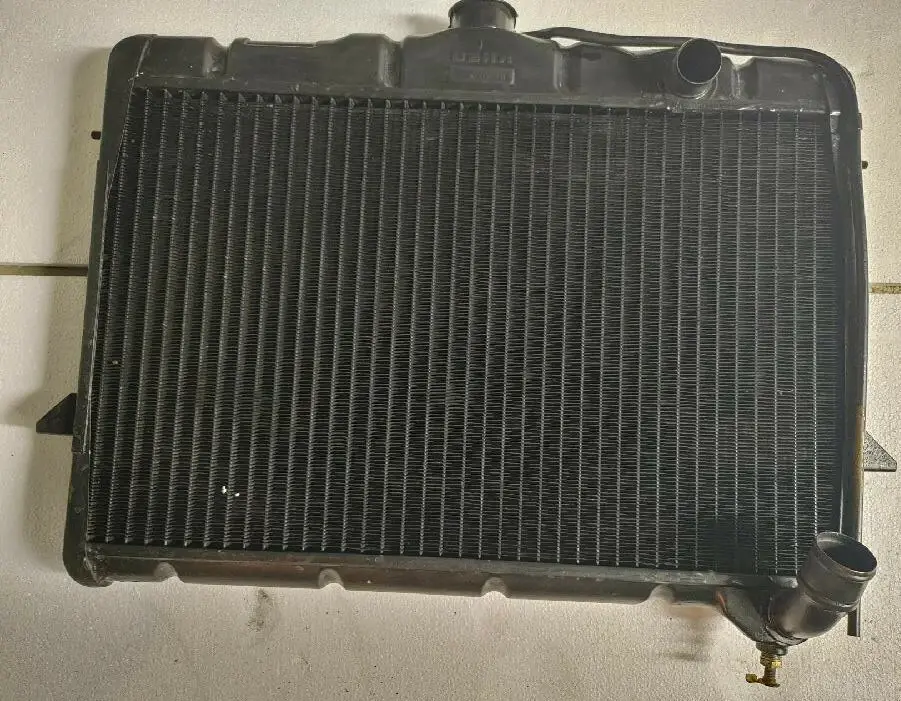
Photo: KDTL/Mercedesoem, from the actual 190SL radiator listing. The listing describes this unit as recored.
A 190SL radiator should do its work in peace. It sits up front and sheds heat. You get to admire the road instead of the gauge. When it cannot do that, the car's charm starts to compete with your blood pressure.
A recored original radiator makes sense when the core is bad but the old tanks and mounts are still sound. Recoring replaces the core. It keeps the usable outer pieces. But a radiator is not a cure for every hot-running 190SL. Confirm the fault, check the rest of the system, and verify fit before buying.
Our example is the original BEHR unit in KDTL's W121 190SL radiator listing. The listing says it has been recored. It gives part number 1215000203. The photos below show that actual part. It is not a stock radiator chosen because it happens to be black.
This is one focused decision: when to choose a recored original radiator, and how to avoid expecting it to fix a different fault. No complete engine rebuild is hiding at the bottom of the page.
The core has coolant passages and cooling fins. Heat moves from the coolant into the air that passes through it. The tanks and pipes guide coolant into and out of the core.
In a recore, a skilled shop replaces the core. It keeps the old tanks and other sound parts. The unit can keep its old look and basic fit. The worn section that sheds most of the heat is renewed.
“Recored” does not tell you all about the work. Ask what core was fitted. Ask who did the repair and what tests were done. The word alone does not prove the design, how well it cools, or the state of every old piece.
It also does not mean the whole part is brand-new. Old tanks, brackets, and pipes may remain. That is often the reason to choose a recore. Those old pieces still need to be sound.
The KDTL listing describes an original BEHR radiator that has been recored. It does not give a documented core row count, flow report, or performance comparison. We will not invent those details because a clean finish makes a persuasive photograph.
Before buying a radiator, describe what the car actually does. Does the gauge climb while waiting in traffic? Does it rise at road speed? Does the car lose coolant? Does it stumble when hot, even without a confirmed coolant fault?
Those patterns matter. Trouble at a standstill calls for an airflow check too. Trouble under load needs a look at coolant flow and how much heat the engine makes.
Confirm that the gauge tells the truth. A bad gauge or sender can send you shopping for a part that works fine. Ask the shop to check the heat with a second test.
Also distinguish a hot-running engine from a hot engine that runs badly. Wallner Classic describes 190SL stuttering and stalling caused by heat affecting fuel in the carburetor float chambers. That is a reason to inspect the whole situation rather than declaring the radiator guilty from the driver's seat. See Wallner Classic's 190SL heat discussion.
If the car is genuinely overheating, losing coolant, or showing distress, stop driving and have it checked. Do not open a hot pressurized cooling system. A roadside scald is not part of the classic-car experience anyone needs to preserve.
With the engine cold, have the coolant level and condition checked. Inspect for leaks at the radiator, hoses, connections, and other relevant points. A system that cannot hold its coolant cannot cool reliably for long.
The radiator cap also deserves attention. Its condition and pressure rating should match the specified system. Do not install a higher-pressure cap as a shortcut around boiling or coolant loss; correct the fault instead.
Wallner Classic includes the pressure-control function of the cooling system in its 190SL discussion. That supports treating the cap and system condition as part of the diagnosis, rather than judging the radiator in isolation. Read the specialist's cooling-system overview.
Check the belt, fan, and water-pump condition. Inspect for anything obstructing airflow through the radiator. On a restored car, tidy appearance does not rule out a missing piece, wrong part, or poor adjustment.
The check does not need to become a shopping list. Find the faulty parts. Do not condemn all parts just because they are old. Fix what needs work and keep sound old pieces doing their jobs.
A radiator can fail by leaking, by becoming restricted, or by losing effective heat transfer. Its outside appearance tells only part of that story. Fresh paint can make a tired core look ready for a concours lawn.
Have a radiator specialist assess the unit. Depending on the symptoms, that may include leak testing, an inspection for blockage, and evaluation of flow and heat transfer. Ask for the result in plain language.
Do not make a decision from one warm or cool spot you noticed by hand. The temperature pattern depends on the system's operating state, and hot parts are a poor place for fingers. Let a technician interpret the test under controlled conditions.
If the radiator leaks around the core or has widespread deterioration, ask whether a localized repair is sensible or whether recoring is the better option. A small repair can be entirely appropriate; a series of small repairs can also become a costly habit.
If the core is sound, replacing it may not solve the complaint. That is useful news, even if you had already imagined how good the new part would look. The best replacement part is sometimes the one you do not need to buy.
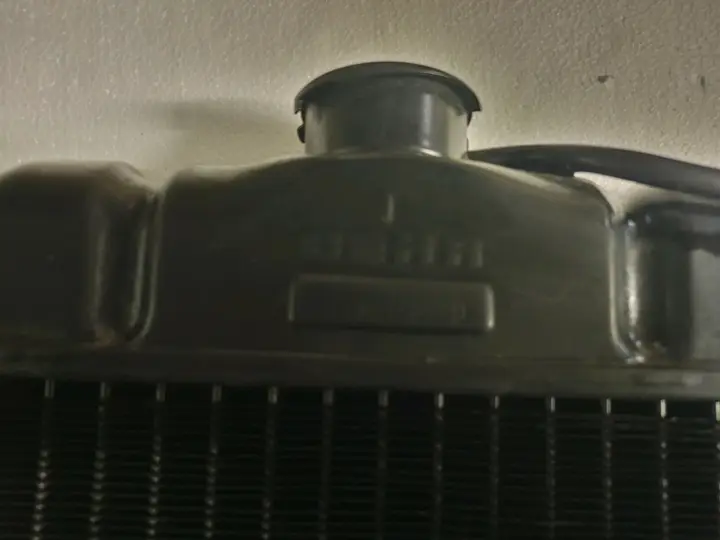
Photo: KDTL/Mercedesoem, from the recored radiator listing. Original markings and tank details help identify the unit; cooling performance still needs proper testing.
An original radiator can matter to an owner who wants the engine bay to retain its period character. Tank shape, visible markings, and mounting details are part of that look. They are easy to overlook until a replacement changes them.
Recoring offers a route between leaving a failing old core in place and replacing the entire assembly. When the original structure is sound, it lets the useful old pieces stay while the worn heat-exchange section is renewed.
That is a practical restoration idea, not simply a show-car idea. Correct mounting and connection details can matter as much as appearance. The right part should fit without asking the installer to turn the car into a metalworking project.
There are times when another replacement design is appropriate. The point is not that every non-original radiator is bad. The point is to make a deliberate choice based on fit, cooling needs, appearance, and the quality of the part.
Nor should “original” become an excuse to overlook damage. A cracked tank or unsuitable mounting structure needs an honest assessment. Preserving history is worthwhile; preserving a fault is not.
Ask about the core design and its suitability for the car. Row count is one detail, not a complete cooling report. Coolant passages, fins, airflow, and the rest of the system all affect the result.
Wallner Classic describes using a radiator with a high-performance core in its 190SL restorations. It also discusses auxiliary fans, thermostats, and water-pump concerns. Its approach is a system-level one, not a claim that one core specification fixes every car. See its 190SL cooling recommendations.
That does not establish the type of core in the KDTL radiator. Ask us for available details about the actual unit. Do not transfer specifications from another shop's restoration to a part whose listing does not state them.
If you are considering an auxiliary fan, make that a separate, informed decision. It can address airflow needs in an appropriate installation, but it should not distract from a leak, restriction, or other unresolved fault.
A sound stock-style repair may be enough for your car's use. A car used in severe heat or long periods of slow traffic may deserve additional planning. Explain how you use the car before the shop chooses a remedy.
The featured radiator listing identifies a BEHR unit for the W121 190SL and gives reference 1215000203. Check that against a suitable parts source and your car's current arrangement. A listing title is a starting point, not a chassis-specific guarantee.
Send photos of the installed radiator and its markings. Compare the tanks, hose connections, filler neck, mounting points, and overall dimensions. Mention any known cooling-system changes.
Ask what comes with it. Do not assume that a cap, drain fitting, mounting rubbers, hoses, or fasteners are included unless the seller confirms it. Plan for the whole installation, not only the largest object in the box.
The seller's description says the unit is recored and ready for installation, but the listing also carries as-is, no-warranty terms and buyer responsibility for compatibility. Arrange suitable inspection before fitting and review the live terms before purchase. Read the complete KDTL radiator listing.
Part numbers and good photos help. They do not replace a check of the actual part. Do it before the coolant is drained. The wrong hose fitting is not a detail you want to discover halfway through the job.
A renewed radiator should not go into a neglected system without further thought. Have the installer decide what cleaning or flushing is needed and check the hoses and related components. Debris left elsewhere can undermine the value of the repair.
Use coolant appropriate to the car and the repairer's guidance. Do not choose it by color alone, and do not mix unknown products because both containers happen to be in the garage. Document what was used.
Fill and bleed the system using the correct procedure. Check for leaks, proper circulation, and a stable temperature. The first test should include safe observation at idle and then normal driving once the shop is satisfied.
If the original complaint appeared in traffic, confirm the repair under similar conditions. If it happened on a sustained drive, a few minutes idling in the workshop are not the final test. The car needs to prove it can do the job that matters to you.
A recored original radiator can be a sensible repair when the core is at fault and the retained structure is sound. It preserves useful original details while renewing the heat-exchange section. It still needs correct fit, proper installation, and a healthy cooling system around it.
If that suits your project, view KDTL's original recored BEHR 190SL radiator. Send us your chassis details, photos, and the diagnosis before choosing a part. You can also browse the KDTL eBay store for other original components.
The aim is not to watch the gauge more closely. It is to make the cooling system reliable enough that you can go back to watching the road.